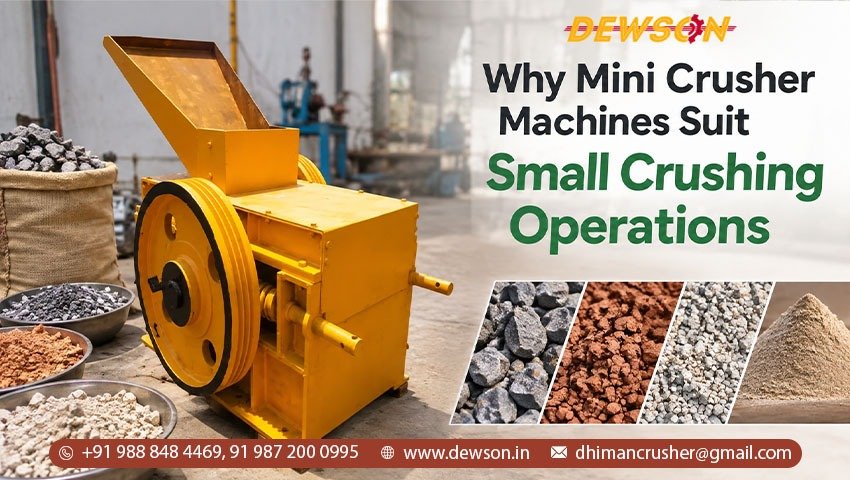


Why Mini Crusher Machines Suit Small Crushing Operations

Jaw Crusher Machine Manufacturers with Modern Crushing Technology
August 20, 2026Efficiency and flexibility are paramount in the rapidly-changing world of modern construction and aggregate production, and this is where a mini crusher machine can prove its value on projects around the globe. With growing urban development and the emergence of civil works that are small in size, it is often impractical and too costly to use a large processing unit. This blog will delve into the mechanical, economic and overall advantages of compact processing units and how they define the future of compact operations.
Compact Crushing Technology and Equipment Fundamentals
Before discussing specific benefits of compact aggregate reduction systems, it is important to learn about the basic engineering of today’s aggregate reduction equipment. The principle of crushing technology is to use mechanical action, compression, impact or shear to reduce large rocks that have been quarried or construction waste into smaller, usable rocks known as aggregates. Traditionally, the primary and secondary reduction plants were large stationary plants, intended for large capacity quarries with daily capacity of thousands of tons.
But in today’s construction world, things are different. These powerful engineering principles are shrunk down to a compact, mobile footprint in compact processing units. These are built with high-strength manganese steel jaws, efficient drives, and long-lasting feeder systems that support concrete, asphalt and natural stone.
Key Advantages of Deploying Compact Reduction Units
- Unmatched Portability and Job Site Flexibility
The foremost advantage of using a mini crusher machine is that it is very mobile. Unlike stationary plants that demand extensive civil foundations, heavy transport permits, and weeks of assembly, compact units are often trailer-mounted or track-driven. These can be towed by ordinary commercial vehicles or directly driven into areas where urban renovation is taking place, into narrow alleys or into rural areas.
- Significant Cost Reductions and Economic Efficiency
Small to medium size contracting jobs can be impacted by operating expenses very quickly. Compact systems can be a significant financial benefit by reducing the need for transportation and disposal of material. Operators can reduce the volume of heavy demolition debris that needs to be taken offsite by crushing and reusing it onsite, eliminating the need for fuel and material costs, and reducing the need to source materials from long-distance quarries.
- Versatility Across Diverse Material Applications
Compact crushers are efficient processing machines, even though they have a compact size. They will be able to handle an extensive range of materials such as:
- Reinforced concrete rubble from the building demolition works.
- Reclaimed asphalt pavement for roadway repairs and patching.
- Natural river stones, hard granite, basalt and limestone for landscaping or sub-base layers.
- Specific aggregate needs for rural roadways and trench backfill.
Operational Best Practices and Environmental Impact
To get the most out of compact crushing equipment, it is crucial to follow the recommended maintenance schedules and best practices. The operator is required to conduct daily pre-start checks, monitor hydraulic fluid levels, inspect wear on the jaw liners and make sure that there isn’t any oversized metallic debris in the feed material that could cause catastrophic feed jamming. Good lubrication of bearings and pivots ensures that the mechanisms function as they should even when operating intensely every day.
Conclusion
The incorporation of a mini crusher machine in small to medium scale operations provides an ideal combination of mobility, cost effectiveness, and sustainable material recycling. These flexible machines allow contractors to optimise productivity while reducing unnecessary transport costs and bringing aggregate production to the site. To meet the machinery’s requirements for a modern industry, trusted manufacturers such as Dhiman Engineering Works offer the best engineering solutions with heavy-duty aggregate processing equipment that performs steadfastly and ensures long lasting success.
FAQs
Q. What is the typical daily processing capacity of these units?
Normal capacities are 10 to 50 tons per hour, depending on hardness of the material.
Q. Are compact crushing plants easy to transport between job sites?
Yes, they are trailer based or track based and can be towed and moved without special permits.
Q. Can output particle size be easily adjusted on smaller units?
Yes, hydraulic or the manual setting adjustments allow the precise control over final aggregate gradation.
Q. How do the feed systems prevent jamming and material blockages?
Vibrating grizzly feeders control amount of the material and reject undersized fines before they reach the crushers.